







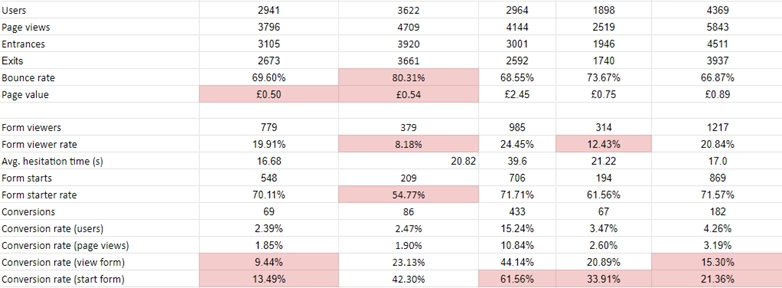
Instead of debating the effectiveness of different design elements or features, CRO relies on testing and analysis to determine what drives better results. When looking to make improvements, it’s important to focus on the areas that will have the biggest impact. Consider the sections of your site that will generate the highest returns, whether that’s optimising landing pages, checkout processes or key calls-to-action. Not every element needs to be tested, and some changes, especially minor edits, can be too small to measure effectively. Always ask yourself: Is this test worth the effort? Will it bring back a meaningful return? The long-term gains from successful tests far outweigh the occasional short-term setbacks. A test that leads to a lifetime of increased conversions is well worth the risk of a single bad day. Conversion Rate Optimisation (CRO) follows a methodical, scientific approach to improve website performance. The process is built on data analysis, hypothesis testing and experimentation. By using this structured approach, businesses can make informed changes that are more likely to produce measurable improvements. Start by gathering data from various analytics tools. This could include user behaviour metrics, such as bounce rates, form abandonment rates or session recordings. The goal is to identify underperforming areas on your website or parts of the user journey where visitors are dropping off or not engaging with. Here are some powerful CRO related software, that are either free or won’t break the bank. The example below uses data from Google Analytics and form analytics for an imaginary lead gen company and their five products – note this is dummy data to illustrate my point. Before making any changes, clearly define the problem you aim to solve. This step involves understanding what’s not working and what needs to be improved. For instance (if the data takes you there) you might focus on increasing the number of users who start interacting with a form and who go on to complete a purchase. Being specific about the problem ensures that your optimisation efforts are focused and measurable. After defining the problem, create a hypothesis that predicts the outcome of your proposed changes. Here are some examples: Your hypothesis should also include the uplift you expect from your change, based on quantifiable numbers. This then allows you to prioritise your resources to focus on what you expect to have the biggest returns. For example: Once the hypothesis is established, the next step is to test it through an experiment. This could involve A/B testing, where two versions of a webpage (the original and the modified version) are shown to different segments of visitors. By comparing how each version performs, you can determine if the changes lead to a better outcome. The key is to ensure that the experiment is controlled and based on sufficient data to draw reliable conclusions. After running the experiment for a sufficient period, analyse the data to see if the hypothesis was correct. Did the new version of the webpage outperform the original? Did the changes lead to a measurable improvement in the targeted metric, such as conversion rates or form completions? This analysis will help decide whether the new version should be permanently implemented or if further testing is needed. Finally, review the results and decide the next steps. If the experiment was successful and met or exceeded the predicted outcome, the changes can be rolled out site-wide. If the test didn’t deliver the expected results, consider tweaking the hypothesis or trying a different approach. The conclusion phase is crucial in refining your CRO strategy and learning what works best for your website. Effective Conversion Rate Optimisation (CRO) begins with identifying the right data sources and tools to understand user behaviour and discover opportunities for improvement. The percentage of visitors who complete a desired action (purchase, sign-up, etc.). Conversion rate is the primary measure of success in most A/B tests. It shows how effectively each variation encourages visitors to take the intended action. The percentage of users who complete a form after starting it (e.g., lead generation, checkout process). For tests involving forms (e.g., sign-up forms, checkout), this metric will show how well different versions are encouraging users to complete the process. The percentage of users who add items to their cart but don’t complete the purchase. A lower abandonment rate might indicate an improvement in user experience or checkout process in a given variant. The average amount spent by customers in a single purchase. If your A/B test is related to pricing, promotions, or bundling strategies, monitoring AOV is important. It can also indicate if certain variations encourage higher spending. The percentage of visitors who leave your site after viewing only one page. A higher bounce rate on a particular variant might suggest that changes are discouraging users from exploring more pages. Lowering the bounce rate indicates that the variation is more engaging. The average amount of time users spend on a particular page or the entire site. Higher time on page or session duration may suggest that the content is engaging, which could indirectly lead to conversions. The number of pages a visitor views during a single session. It’s especially relevant if your goal is to increase exploration or product discovery. The percentage of visitors who click on a specific link, button, or call-to-action. Useful for measuring engagement with specific elements, such as banners, CTAs, or product listings. High CTR in a variant might indicate better design or content, even if it doesn’t lead directly to conversions. The percentage of users who stop using your product or service over a certain period. For subscription-based services like web hosting and domain names, churn rate helps to measure the long-term impact of your test on customer retention. When optimizing your website for conversions, it’s important to take a holistic approach, addressing various elements that directly impact user experience. Forms play a crucial role in capturing leads, but poorly designed become a major obstacle, driving users away before they complete the process. A smooth, user-friendly form experience significantly boosts conversions. Here’s some ideas on how to refine your forms for better results: A well-designed CTA is one of the most important elements of your website. It drives the user toward completing a conversion, whether it’s signing up, making a purchase, or downloading content. With mobile traffic frequently accounting for a significant portion of total visitors, optimizing the mobile experience is essential. Many mobile users will abandon your site if it’s not easy to navigate or if it takes too long to load. Beyond just technical optimization, user experience plays a significant role in conversion rates. Building trust and making the user feel secure during their journey can lead to higher engagement and conversions. Some additional areas to focus on: Conversion Rate Optimisation (CRO) doesn’t stop at your website. For maximum impact, it should extend across all customer touchpoints. From email marketing to customer support, each interaction plays a vital role in shaping the overall user experience and driving conversions. Here’s how CRO can be applied beyond your website: Emails are a direct way to engage with your audience, and optimising them for conversions is essential. A well-crafted email with a compelling call-to-action (CTA) can drive traffic back to your site or encourage purchases. To optimise email campaigns: Onboarding is a crucial phase in the customer journey. Whether you’re guiding users through a software setup or helping them get started with a service, an optimised onboarding process can significantly boost engagement and reduce drop-offs. Automated notifications, such as order confirmations, shipping updates, and even abandoned cart reminders, are all opportunities to reinforce trust and encourage further engagement. To optimise: For businesses offering software or platform services, optimising the user experience in control panels or customer dashboards is essential. A poorly designed interface can frustrate users and discourage them from using your product fully. To optimise: Conversion Rate Optimisation (CRO) is an ongoing process that delivers long-term benefits for businesses by making the most of existing traffic. Rather than relying solely on increasing visitors through costly traffic-generation strategies, CRO helps businesses turn more of those visitors into customers or leads, offering a much higher return on investment. The key to effective CRO is a data-driven approach. By consistently collecting insights and running experiments, businesses can identify the changes that drive real improvements in conversions. It’s important to remember that not every test will yield success, and that’s okay. CRO is about continual learning and refinement. We share free Insights on the latest tech trends, marketing, strategic branding, and business growth.ⓘHow to Approach CRO
The Scientific Approach and CRO
1. Collect the Data
2. State the Problem
Our free trial checkout process asks for too much personal information before purchase.
3. Develop a Hypothesis
Cutting the number of fields a customer has to complete to activate their free trial will reduce form churn.
Continuing to market the brand and product benefits in the checkout will reduce a prospect's perceived risk and increase conversions.
If we increase conv% by 15% (from 3.64% to 4.19%), we'll convert an extra 27 users per month = additional £114k/year ((27*£350)*12).
4. Run an Experiment
5. Analyse the Results
6. Draw Conclusions
Key Metrics for CRO
CRO Metrics
Conversion Rate
Form Completion Rate
Cart Abandonment Rate
Average Order Value (AOV)
Bounce Rate
Time on Page (or Session Duration)
Engagement Metrics (Pages per Session)
Click-Through Rate (CTR)
Churn Rate
Areas of your website to investigate
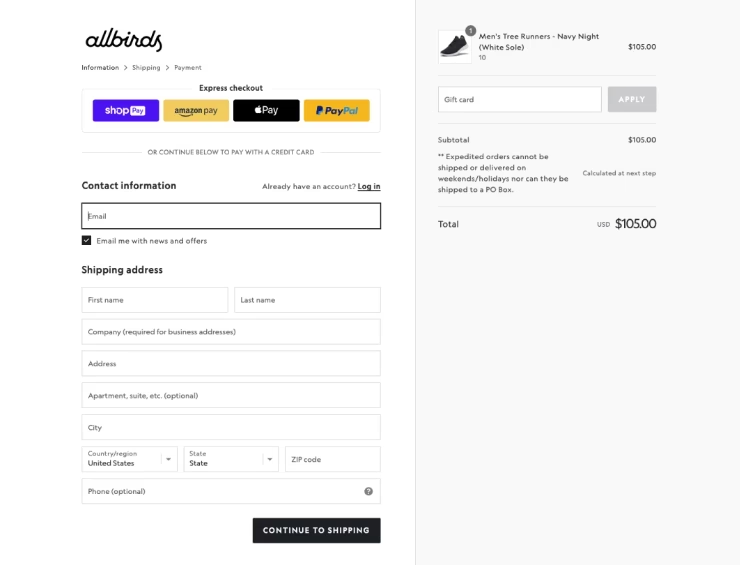
Checkout/Form Optimization
Calls-to-Action (CTAs)

Optimizing for Mobile Users

User Experience (UX) and Trust Signals

Beyond Landing Pages: CRO At Every Customer Touchpoint
Email Campaigns
Product or Service Onboarding
Customer Communications and Notifications
User Experience in Control Panels and Dashboards
Final Thoughts
Join our smart! community
The most successful approach to Conversion Rate Optimisation (CRO) is grounded in data, not personal preferences or gut feelings.